Part 2 of the Weye Model Cars "Ultimate Beginner's Guide" is here. This week: Diecast vs. Resin vs. Composite.
In Part 1 of our guide, we established the difference between a simple toy and an adult collectible. Now, we dive deeper into the very essence of a model car: its material. The substance a model is crafted from is its soul, dictating its tactile feel, its potential for detail, its durability, and its final price.
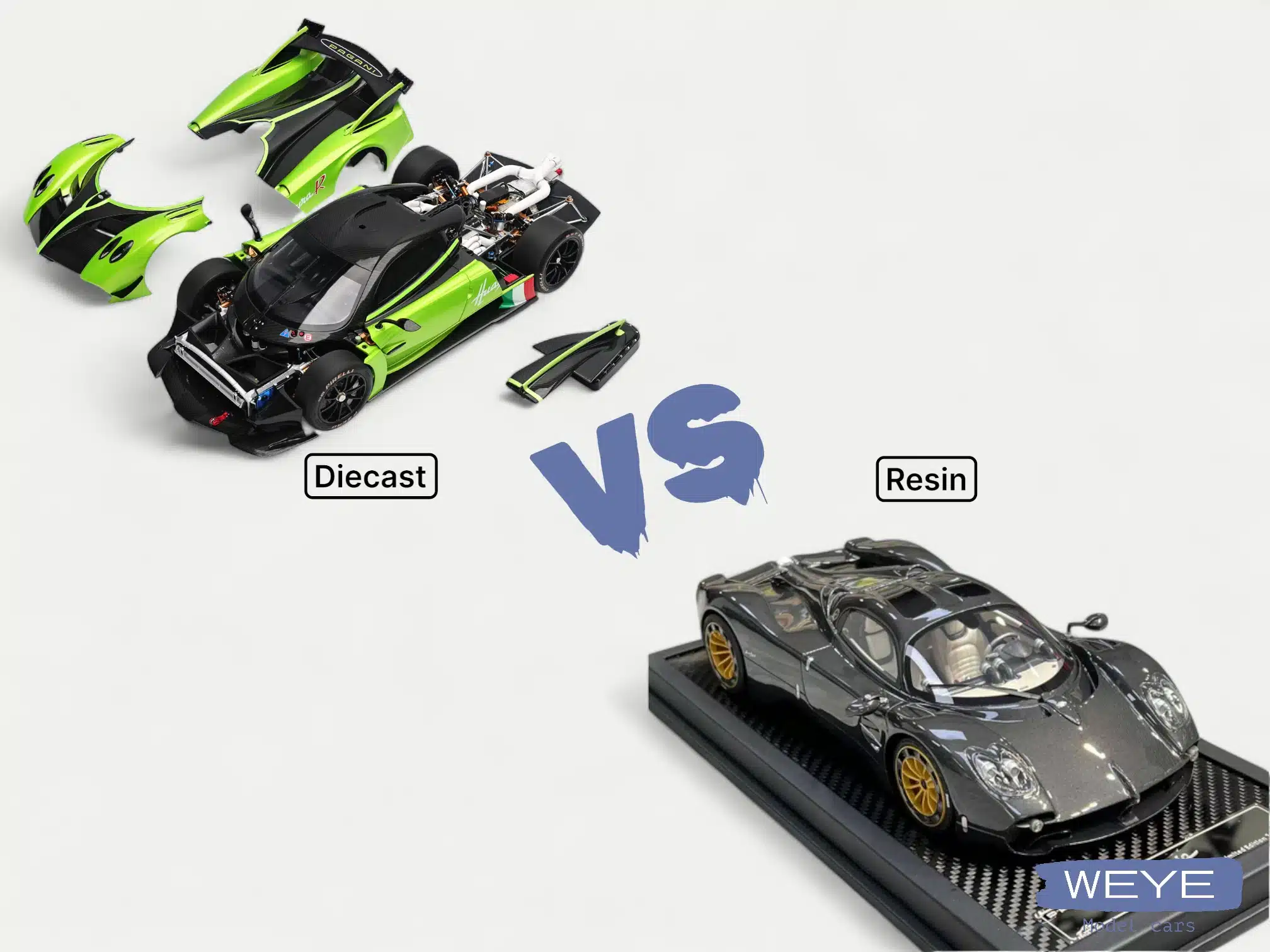
For a new collector, the terms “diecast,” “resin,” and “composite” can be confusing. They aren’t just different materials; they represent entirely different manufacturing philosophies and target different collecting goals. Understanding what is the difference between diecast and resin model cars, as well as the new-guard “composite,” is the most important step in knowing what you are buying.
The Classic Heavyweight: Diecast Metal
When you picture a high-quality model car, you are probably thinking of Diecast. This is the traditional standard for model car production and remains the most popular material today.
The Material & Process: The term “Diecast” technically refers to the manufacturing process, which is high-pressure die-casting. The material itself is almost always a zinc alloy called Zamak, an acronym for its metal components: Zinc, Aluminum, Magnesium, and Kopper (copper). In this process, the molten Zamak alloy is injected under immense pressure into a two-part hardened steel mold, also known as a “die”. This high-pressure process is designed for high-volume production, as the steel molds are extremely durable and can be used hundreds of thousands of times.
Pros: The primary advantages of Diecast are its durability and substantial weight. The solid metal construction gives the model a satisfying, premium “heft” in the hand that collectors love. This inherent strength also allows manufacturers to engineer functional, moving components. This is the biggest check in the “pro” column for the sealed vs opening model cars pros and cons debate: Diecast models can have fully opening doors, hoods, and trunks, allowing you to see the detailed interior and engine bay.
Cons: The high-pressure injection process, while efficient, can sometimes result in slightly softer body lines or less crisp detailing compared to the more delicate resin process. The main collector concern, especially with older models, is what is zinc pest on diecast models. “Zinc pest” (or zinc rot) is a non-reversible condition where impurities in the alloy cause the metal to become brittle, expand, crack, and crumble over time. A related issue is “paint rash,” where microscopic gasses trapped in the metal during casting expand when the model is painted and baked, causing tiny, permanent bubbles or blemishes on the surface.
The Artist’s Medium: Resin
If Diecast is the product of industrial might, Resin is the medium of the artisan. Resin models cater to the high-end collector who prioritizes perfect detail above all else.
The Material & Process: Resin models are crafted from a polyurethane plastic. The manufacturing process is far more manual and labor-intensive than diecasting. A highly detailed “master” model is perfected by hand, and a flexible mold is created from it using silicone. Liquid resin is then poured into the silicone mold (not injected) and is often cured in a pressure pot to force out any microscopic air bubbles, resulting in a flawless, smooth surface.
Pros: Here we find the biggest pros… of resin model cars. The gentle, gravity-fed pouring process allows the liquid resin to capture incredibly fine details. This results in models with razor-sharp, precise panel lines, delicate trim pieces, and complex shapes that are often impossible to achieve with Diecast metal. Because the silicone molds are much cheaper to create than steel dies, this process is perfect for producing small, limited runs of rare, obscure, or niche vehicles that wouldn’t be commercially viable for a mass-market diecast release. The silicone molds also degrade quickly, often after 30-40 casts, which naturally limits production and enhances rarity.
Cons: Now for the cons of resin model cars. The material is inherently brittle and fragile. Small parts like side mirrors, antennas, and spoilers can break off easily if mishandled. This fragility is also the primary reason for their biggest drawback: Resin models are almost always “sealed body”. The material is too delicate to engineer strong, durable hinges for opening parts. This is the critical trade-off in the sealed vs opening model cars pros and cons dilemma: you sacrifice the interactivity of opening parts for superior exterior detail. Finally, the highly manual, labor-intensive process and the short lifespan of the silicone molds make Resin models significantly more expensive.
In recent years, a third category has emerged, pioneered by the high-end brandAUTOart to solve the dilemma between Diecast and Resin. This “Composite” approach is a hybrid philosophy attempting to merge the best attributes of both.
The Material & Process: This is the key to understanding what is AUTOart composite material. It is not a simple plastic toy, and it is not Resin. A composite model features a body made from an injection-molded Acrylonitrile Butadiene Styrene (ABS) plasticblend. This high-grade thermoplastic body is then mounted to a traditional die-cast metal interior and chassis structure.
Pros: This hybrid method successfully delivers the “best of both worlds.” The engineered ABS body allows for the sharp panel lines, clean vent openings, and precise details of a resin model. At the same time, the internal Diecast metal frame provides the necessary rigidity and strength to support a full array of opening parts—something sealed Resin models cannot do. This method also completely eliminates the risk of what is zinc pest on diecast models and paint rash.
Cons (The Collector Debate): The primary criticism from collectors is the feel. Composite models are significantly lighter than their full-diecast counterparts. For many enthusiasts, the “heft” of a metal model is an integral part of its perceived quality, and the lighter weight can feel less premium. This has led to a vigorous debate about value perception, as AUTOart initially presented the move as a way to manage costs, yet the retail prices for these composite models have continued to rise, commanding prices equal to or greater than the premium Diecast models they replaced.
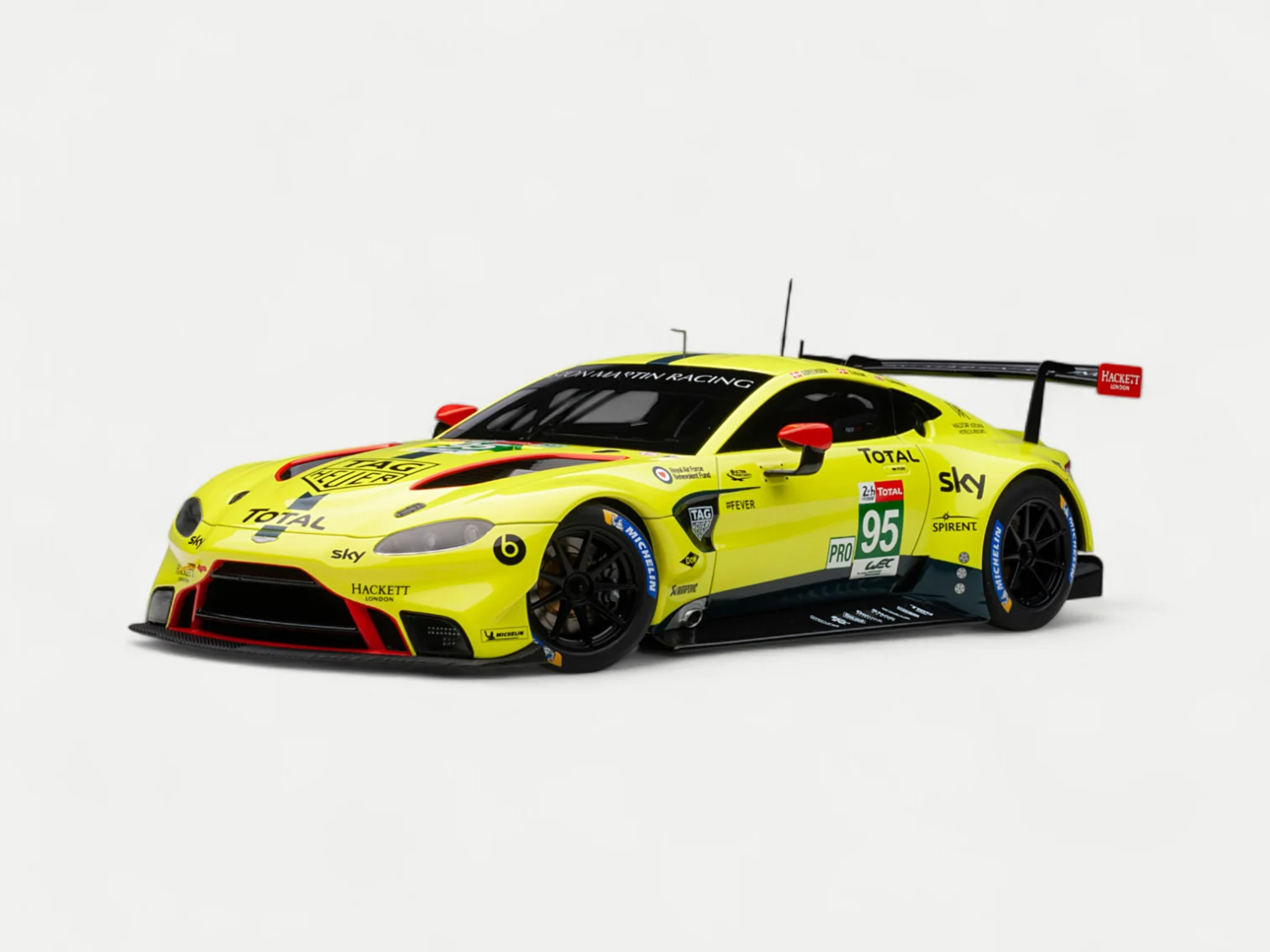
AUTOart's Composite Model – 1:18 Aston Martin Vantage GTE #95 “Dane Train”
At-a-Glance Comparison: Diecast vs. Resin vs. Composite
Feature
Diecast Metal
Resin
Composite
Primary Material
Zamak (Zinc Alloy)
Polyurethane Resin
ABS Plastic Body, Diecast Metal Interior
Feel
Heavy, solid, substantial
Lightweight, can feel delicate/brittle
Lighter than diecast, feels less substantial
Detail Level
Good to Very Good
Excellent to Exceptional (razor-sharp lines)
Excellent (sharp lines like resin)
Durability
Very Durable
Fragile (delicate parts can break easily)
More durable than resin, but body can crack
Common Features
Opening Parts (doors, hood, trunk)
Sealed Body (no opening parts)
Opening Parts
Best For…
Collectors who value interactivity and a classic, weighty feel.
Collectors who prioritize supreme exterior detail and niche subjects.
Collectors seeking the “best of both worlds”: sharp detail and opening parts.
Conclusion: How to Choose the Right Material for You
Now that you understand the pros and cons of resin model cars versus Diecast, the choice comes down to a simple question of collecting philosophy: What do you value most?
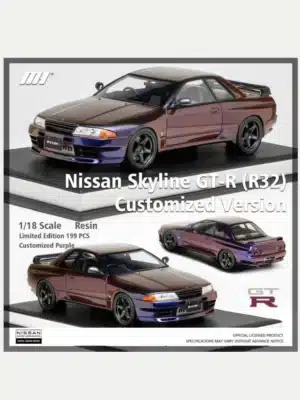
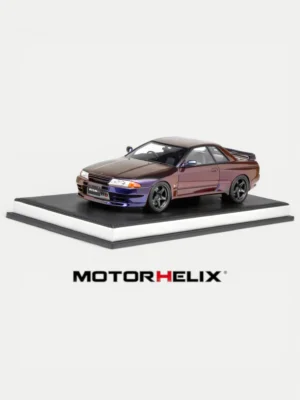
Choose Diecast if: You love the satisfying weight of a metal object and believe the “soul” of a model car includes the ability to open the doors, lift the hood, and admire the engine. Brands like LCD Models and Motorhelix have built their reputation on creating stunning, fully-opening Diecast models that are a tactile joy to handle.
Choose Resin if: You are a purist who values absolute visual accuracy above all. You are building a static display and want your model to be a perfect, sharp replica of the real car, even if it means it’s a “sealed body”. You also love collecting rare and obscure cars that Diecast manufacturers would never produce.
Choose Composite if: You want it all. You demand the razor-sharp panel lines of a Resin model but cannot stand the idea of a sealed vs. opening model car that doesn’t open. You are willing to accept a lighter feel in exchange for precision and functionality.
Ultimately, there is no single “best” material. The “best” choice is the one that brings you the most joy. As you build your collection, you will likely find room for all three.
Ready to see the differences for yourself? Head over to Weye Model Cars to explore our curated selection of high-quality Diecast, Resin, and Composite models from the world’s top brands.
Stay tuned for Part 3 of our series, where we will do a deep dive into the most popular model car scales and help you decide which size is right for your collection.







![[PRE-ORDER] INNO64 1:64 Nissan Skyline GT-R (R32) Midnight Purple - Australia Special Edition (Limited)](https://weyemodelcars.com/wp-content/uploads/2026/01/inno64-skyline-gtr-r32-midnight-purple-australia-special-edition-poster-300x400.webp)




%20Customized%20Version%20–%20Purple%20(Resin,%20Limited%20199)&url=https://weyemodelcars.com/product/motorhelix-118-nissan-skyline-gt-r-r32-customized-version-purple-resin-limited-199/&media=https://weyemodelcars.com/wp-content/uploads/2026/01/motorhelix-1-18-nissan-skyline-gtr-r32-customized-purple-limited-edition-791x1024.webp)
%20Midnight%20Purple%20–%20Australia%20Special%20Edition%20(Limited)&url=https://weyemodelcars.com/product/pre-order-inno64-164-nissan-skyline-gt-r-r32-midnight-purple-australia-special-edition-limited/&media=https://weyemodelcars.com/wp-content/uploads/2026/01/inno64-skyline-gtr-r32-midnight-purple-australia-special-edition-poster-791x1024.webp)


