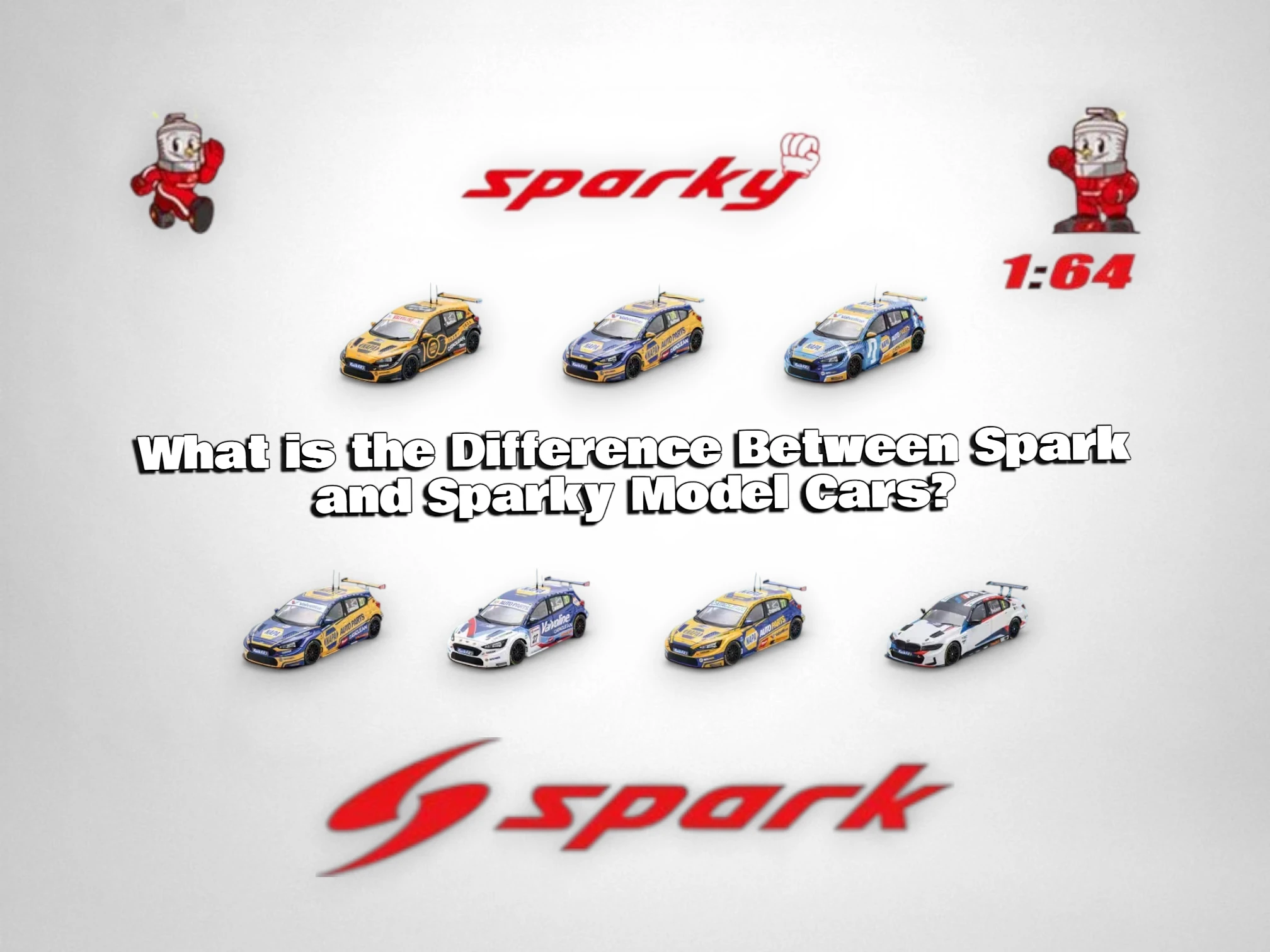
What is the Difference Between Spark and Sparky Model Cars?
If you are new to collecting scale model cars, you might be confused by two very similar names: Spark and Sparky. The short answer is: Sparky is the 1/64 scale diecast sub-brand of Minimax, the same parent company that produces premium 1/43 and 1/18 scale resin models under the flagship Spark Model brand. While they share the same motorsport DNA, they cater to different collector needs regarding scale, material, and price.
The Origin of Sparky: Is Sparky Made by Spark?
Yes, Sparky is made by the same parent company as Spark Model—Minimax. Minimax established the Spark brand to dominate the premium resin model market, focusing on highly detailed replicas of endurance and GT racing cars.
However, as the 1/64 scale diecast market exploded in popularity, the company needed a way to offer smaller, more affordable, and durable metal cars without diluting the ultra-premium reputation of their resin line. To solve this, they launched Sparky. Sparky serves as the official 1/64 diecast division, bringing Spark’s extensive racing licenses to a broader audience.
Spark Model Brand Review
To truly appreciate Spark, you must understand its roots. Founded in 2000 by motorsport enthusiast Hugo Ripert to model the entire Le Mans grid (including obscure cars), the brand utilizes polyurethane resin instead of traditional diecast steel molds to produce small, niche batches.
But how does a Spark model actually hold up in a collection? From a review standpoint, Spark is a masterpiece of static display. Because resin can be cast much thinner than zinc alloy, their 1/43 and 1/18 models boast razor-thin aerodynamic winglets, delicate photo-etched (PE) metal wipers, and perfectly scaled antennas. The paint and water decals are meticulously hand-applied, resulting in museum-quality accuracy.
However, there are trade-offs. Spark models are exceptionally fragile; a simple drop or mishandling can easily snap a spoiler or a mirror. Additionally, because they are hand-assembled and hand-decaled, minor quality control variations (like a slightly misaligned decal or silvering) can occasionally occur. Despite these quirks, for hardcore motorsport fans seeking extreme precision and a massive catalog of cars that no other brand makes, Spark remains the ultimate gold standard.

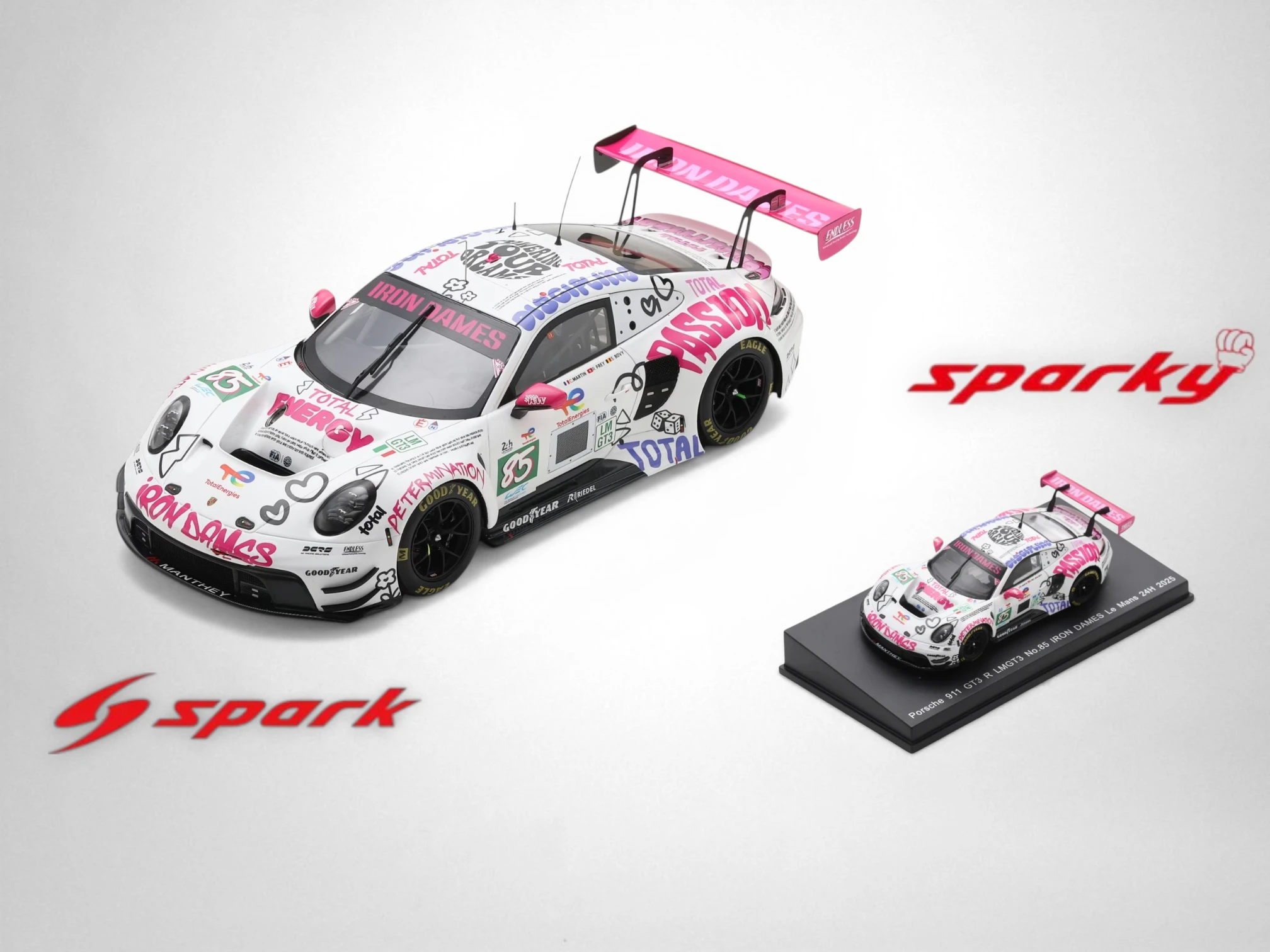
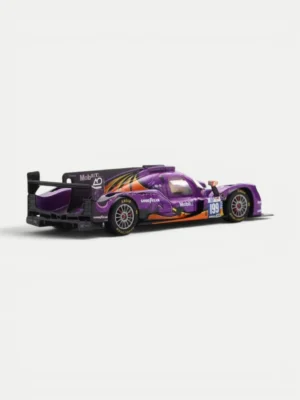
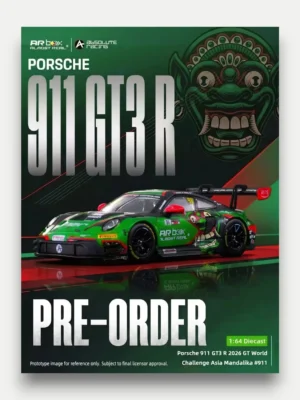
The 1/18 Spark resin model (left) vs. the 1/64 Sparky Porsche 911 GT3 R Iron Dames Diecast (right).
How Good Are Sparky Diecast Cars?
So, how does this premium resin DNA translate to entry-level diecast? Remarkably well. What truly sets Sparky apart in the crowded 1/64 market is its refusal to compromise on motorsport authenticity.
While many brands at this price point use thick, molded-in metal details to save costs, Sparky frequently utilizes separate, delicate plastic inserts for complex rear wings and front dive planes to maintain scale accuracy. Furthermore, almost every Sparky model comes mounted on a premium base with a hard acrylic display case—a feature usually reserved for much more expensive collector tiers. Combined with their parent company’s world-class water decal technology, Sparky delivers incredibly accurate F1 and GT3 grids without breaking the bank.
Sparky vs. MINI GT: Brand Comparison
When discussing 1/64 scale diecast models, comparing Sparky to MINI GT is inevitable. Both offer fantastic quality, but they have different strengths across the board:
- Decals and Paint: Sparky excels at complex racing liveries and water decals, drawing from its parent company’s expertise. MINI GT is widely praised for its thick, glossy, and flawless tampo-printed paint finishes, which are highly durable.
- Model Selection: Sparky is aggressively focused on hardcore motorsport tracks. MINI GT has a broader catalog, dominating the JDM, widebody, and street car segments, alongside their racing lineup.
- Rollability: MINI GT is famous for its smooth-rolling wheels, perfect for collectors who like to handle their cars. Sparky leans toward a static stance, often featuring tighter wheels to accurately replicate a race car’s low ride height.
Case Study: 1/64 F1 Showdown – VCARB 01 (Daniel Ricciardo)
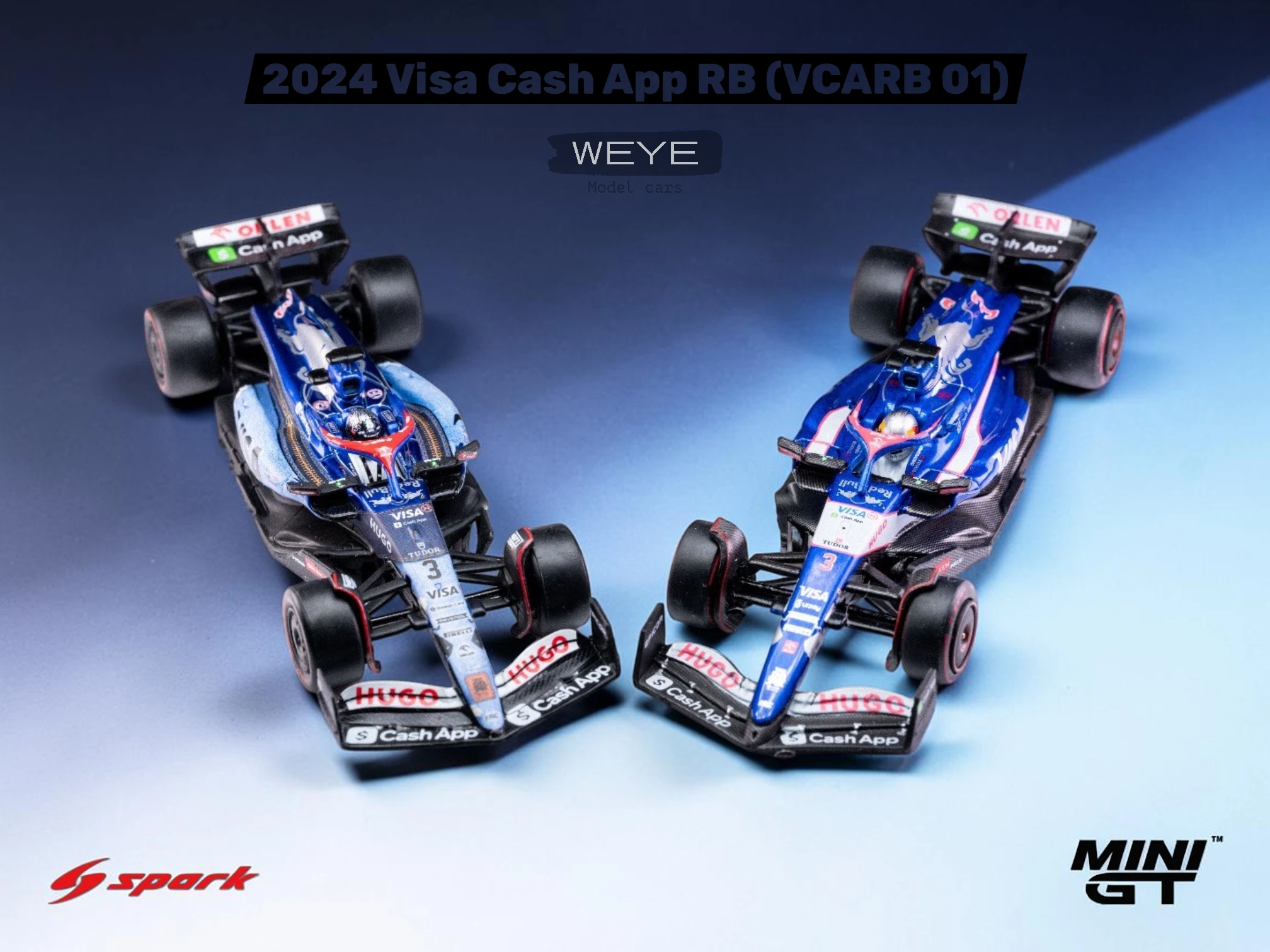
To truly see these differences in action, let’s look at a head-to-head comparison of Daniel Ricciardo’s 2024 Visa Cash App RB (VCARB 01).
- The Liveries (Denim vs. Metallic): Sparky shines when replicating highly specific, one-off designs, such as the matte “Denim” livery from the Singapore GP, capturing intricate textures flawlessly. MINI GT excels with the standard season livery, delivering a stunning, deep metallic blue base with a high-gloss clear coat and sharply printed tampo decals.
- Aero Details: Scaling down F1 aerodynamics requires compromise. Sparky pushes for thinner, more delicate front wing flaps and finer antennas for true-to-scale accuracy. MINI GT uses slightly thicker aero elements to ensure structural durability during handling.
- Driver & Cockpit: Both brands nail the tiny helmet details. However, Sparky often includes special-edition helmets and sets the driver slightly deeper in the cockpit for a more realistic racing posture, whereas MINI GT provides a solid, brightly detailed standard helmet.
The Sparky 1/64 VCARB 01 (left) vs. the MINI GT 1/64 VCARB 01 Daniel Ricciardo (right).
Spark vs. Sparky: Which Brand Belongs in Your Collection?
| Feature | Spark Model | Sparky |
|---|---|---|
| Material | Resin | Diecast (Metal Alloy) |
| Main Scales | 1/43, 1/18, 1/12 | 1/64 |
| Price Point | Premium / Collector-Grade | Entry-Level / Accessible |
| Best For… | Static display, ultimate museum accuracy. | 1/64 grids, premium packaging, diecast value. |