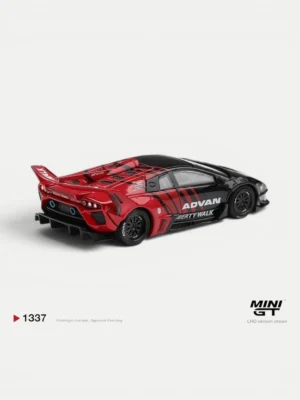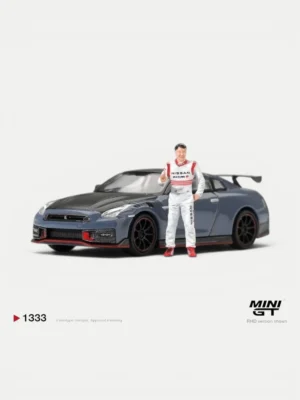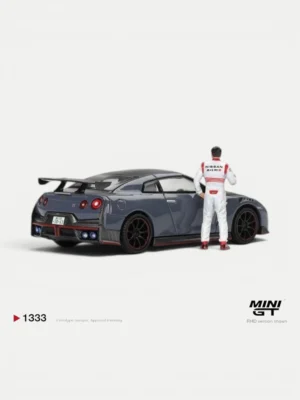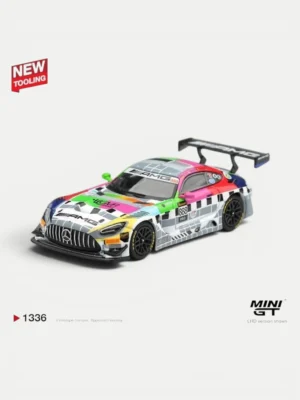
How to Identify Rare Model Cars: Chase Cars, Super Treasure Hunts & Limited Editions
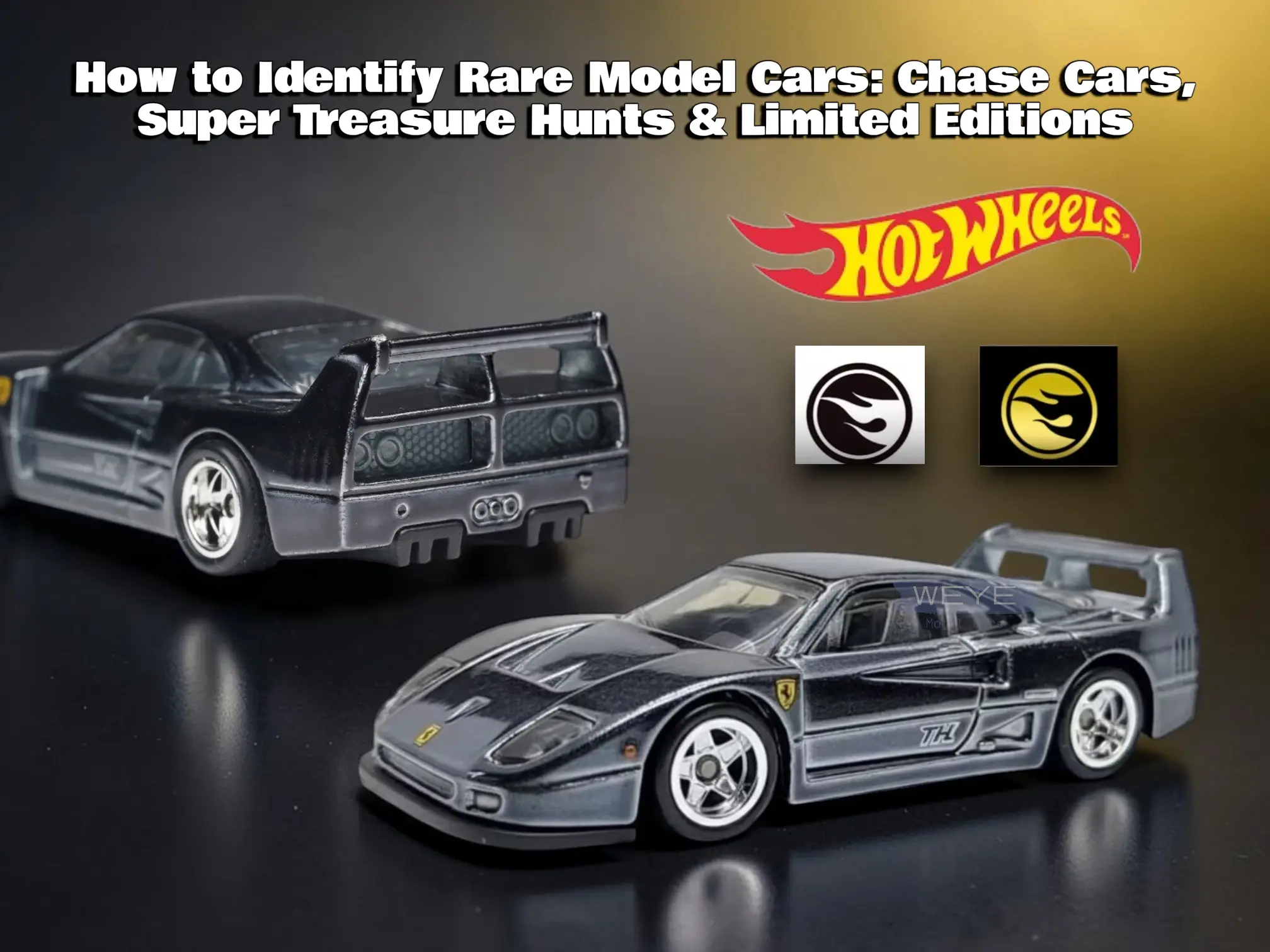
For model car collectors, the passion often shifts from simply accumulating models to the exhilarating “thrill of the hunt.” The true excitement of advanced diecast collecting lies in uncovering hidden gems, understanding limited production numbers, and identifying manufacturing anomalies that casual buyers completely overlook. This guide decodes the complex ecosystem of rarity in the global diecast world, elevating your knowledge from a casual buyer to an insider.
What Makes a Diecast Car Rare?
In the highly competitive world of 1:64 and larger scale diecast models, rarity is rarely an accident. Manufacturers deliberately engineer scarcity into their production lines to foster robust secondary markets, drive immense community engagement, and elevate brand prestige. Rarity is the psychological engine that transforms a simple toy into a coveted collectible. Several primary factors influence this engineered rarity: limited production runs (where molds are destroyed or retired after a specific number), highly localized regional availability, and exclusive licensing agreements.
Furthermore, the physical condition of the item plays a paramount role in its final valuation ; a rare car in “mint condition”—meaning it is perfectly preserved, devoid of any paint chips, and permanently sealed in its original, unpunched blister pack—will exponentially command the highest premium over a “loose” or unboxed model. When a collector intimately understands the mechanics of rarity, a simple trip to a local retailer or hobby shop transforms from a mundane shopping errand into an educated, high-stakes treasure hunt.
Diecast Model Car Chase Identification & Brand Ratios
As a beginner, one of the most confusing experiences is opening a brand-new blind box, finding a completely unpainted, silver-looking car, and wondering, “Did the factory forget to paint my model?” Don’t throw it away—you just hit the jackpot. This is a Chase Car. A chase is a rare, alternate variant of a standard diecast model secretly inserted into retail shipments. To hunt successfully and avoid overpaying on the secondary market, it helps to understand how premium brands handle these releases and what visual “tells” to look for.
Mini GT & Kaido House Chase Car Identification
These two brands dominate the 1:64 JDM market with a strict, highly engaging blind-box format. For Kaido House, models are shipped in master cases of 24 units, and the chase ratio is typically 1 in 24—meaning you will generally find one chase car per sealed master case. Standard MINI GT cases also usually follow a 1 in 24 or 1 in 48 ratio depending on the specific release size.
Since Kaido House boxes have no transparent windows, you must break the factory seal to see what’s inside. Both MINI GT and Kaido House predominantly use the “Raw Metal” (ZAMAC) finish for their chases. If the box art shows the purple BMW M3 (E30), but you pull out a bare, silver metallic M3 with exposed tooling lines, you’ve found the chase. Occasionally, they will also swap the standard wheels for uniquely colored variants.
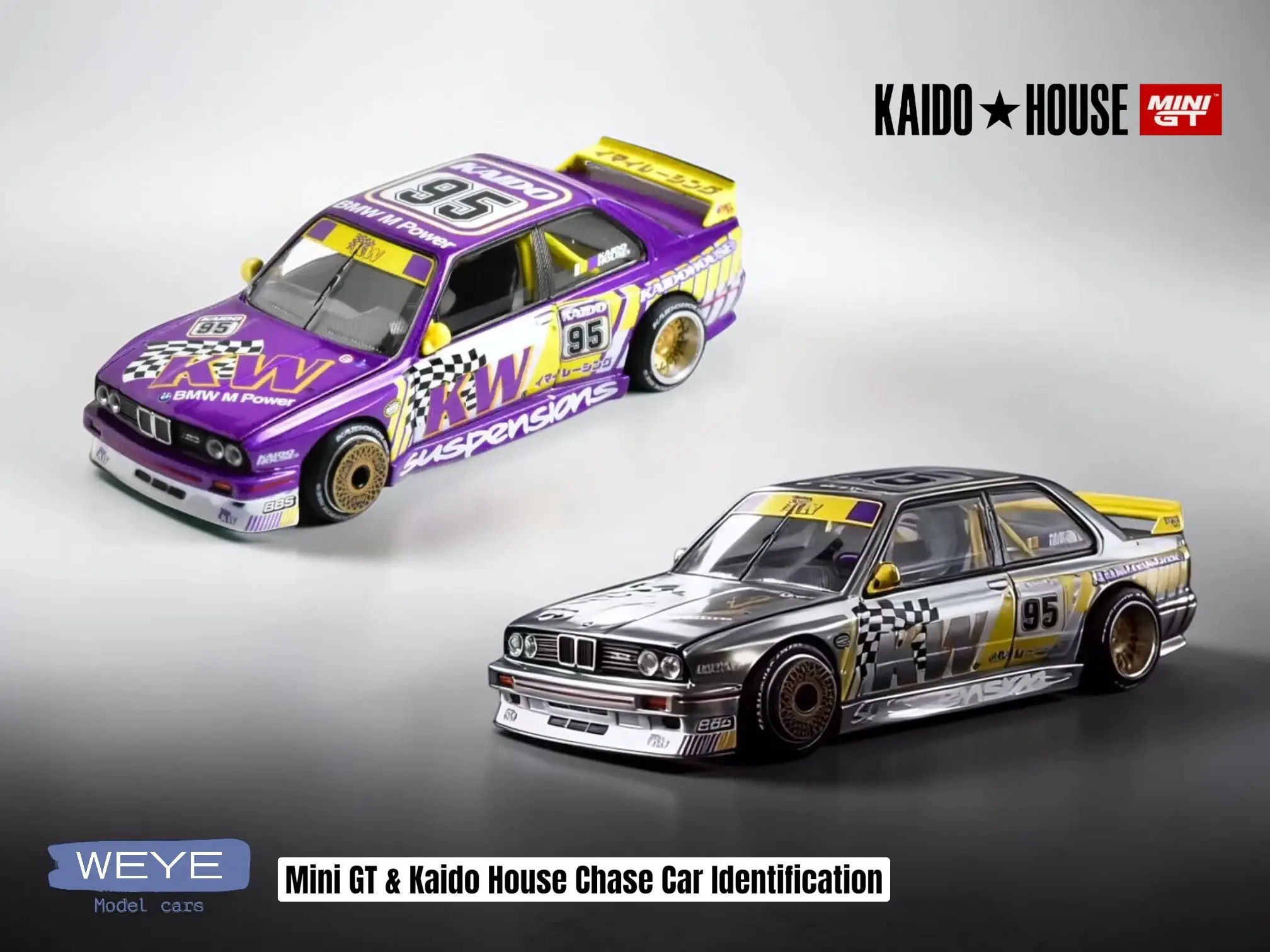
The standard MINI GT x Kaido House BMW M3(left) vs. the "Raw Metal" chase variant (right).
M2 Machines Chase and Super Chase Mechanics
If you are a beginner who hates guessing games, M2 Machines is the brand for you. They are incredibly transparent and actually print the production numbers directly on the packaging. You just need to know where to look.
M2 has two distinct tiers. The Regular Chase is usually limited to either 1 of 750 or 1 of 500 worldwide. You can spot these by looking for flashy upgrades: gold-chrome bumpers, gold wheels, or uniquely colored tires. Then there is the holy grail: the Super Chase, limited to just 1 of 250. These are almost always raw, unpainted bare metal bodies, or sometimes full-body colored chrome. Just look at the metallic foil sticker on the front of the blister pack—if the sticker says “1 of 250” and the car is raw metal, you’ve hit the jackpot.
Tarmac Works & Pop Race Chase Car Identification
Representing the higher-end premium tier of 1:64 racing models, Tarmac Works and Pop Race don’t hold your hand with shiny stickers. Finding a chase here requires you to actually know the car.
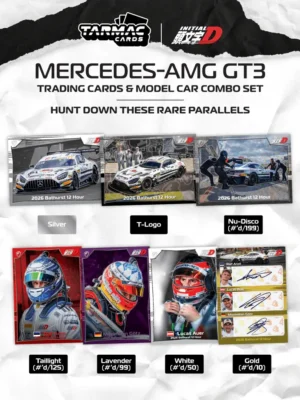
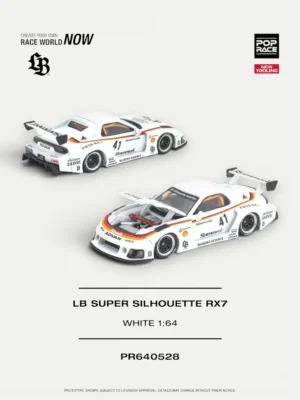
The pull rate for these is also generally 1 in 24 per master case. However, their chase variants are much more stealthy. Instead of just stripping the paint, these brands reward collectors with a keen eye. A chase might feature an alternate racing livery, a different colored roll cage, or an exclusive exposed carbon-fiber hood instead of a painted one. Sometimes they do a “Silver Chase” (raw metallic alloy). To spot these, you need to be familiar with what the standard release looks like in the catalog. If you pull a car and the hood is carbon fiber when it shouldn’t be, you’ve found the chase.
How to Identify Hot Wheels Super Treasure Hunts
Absolutely no conversation about model car rarity is complete without thoroughly discussing Hot Wheels. Decades ago, Mattel completely revolutionized the diecast hunting culture by deliberately introducing the Treasure Hunt series into standard retail shipments. However, to the untrained eye of a parent or a novice, these incredibly rare cars look identical to standard $1.50 mainline toys hanging on a peg. Understanding the specific, often microscopic markers of a Regular Treasure Hunt (TH) and a Super Treasure Hunt ($TH) is the definitive knowledge that instantly elevates a beginner to insider status.
Regular Treasure Hunts (TH) Identification
Regular Treasure Hunts are produced in noticeably smaller quantities than standard mainlines but are still relatively common if you know what to look for. They are identifiable by three distinct, unalterable features:
- The Flame Logo: A specific “circle flame” logo printed somewhere seamlessly integrated into the vehicle’s livery or graphics.
- Standard Materials: They utilize standard, non-metallic enamel paint and standard plastic wheels, preventing them from standing out too aggressively.
- Card Marking: A corresponding silver circle flame emblem is printed directly on the cardboard packaging (the blister card) directly behind the car, obscured by the plastic bubble.
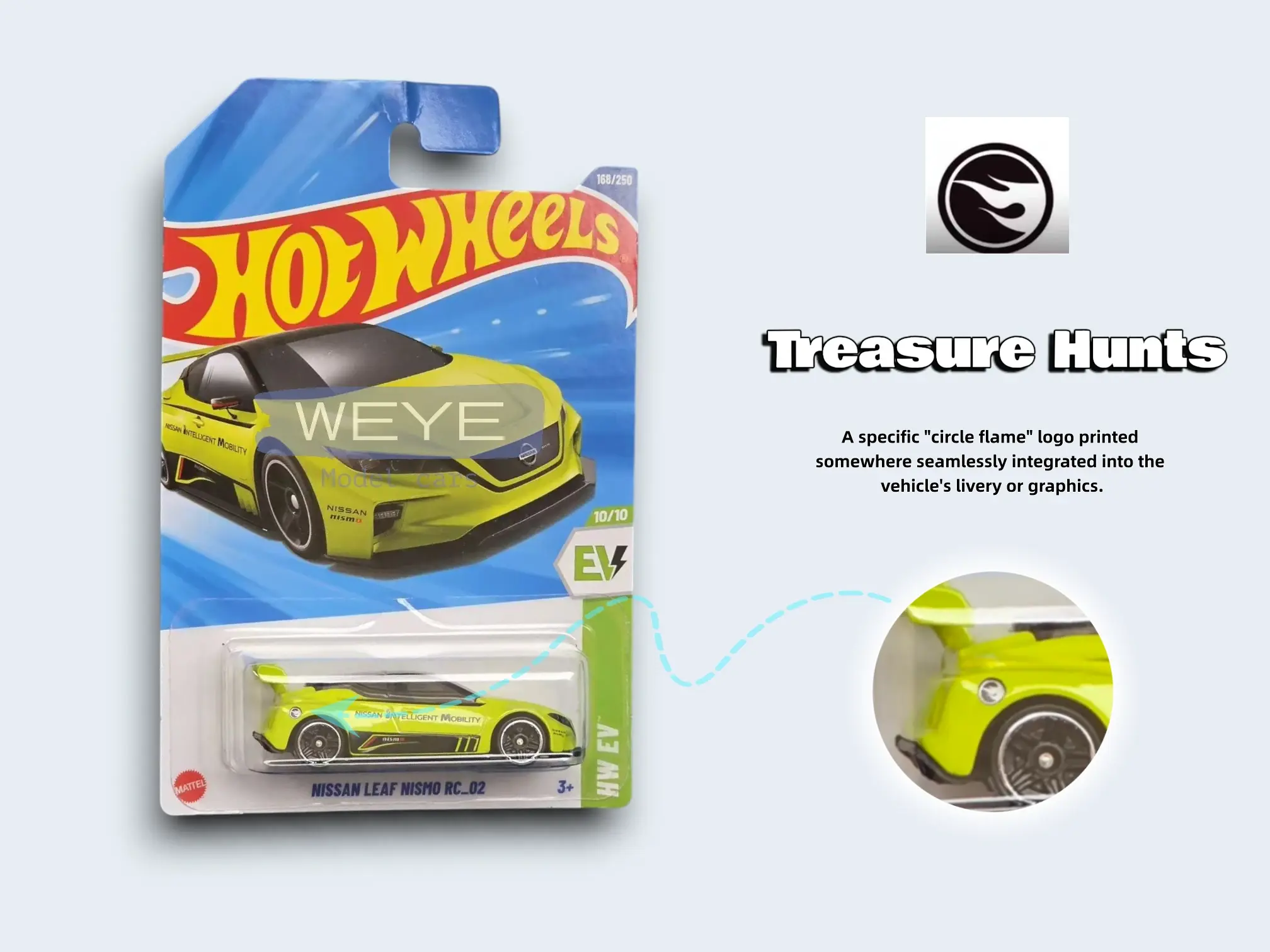
Look closely: The hidden "circle flame" logo on a Hot Wheels Nissan Leaf indicates a Regular Treasure Hunt (TH).
What are Super Treasure Hunts ($TH)?
Super Treasure Hunts are the ultimate retail holy grail. Inserted at an incredibly low ratio (historically estimated at 1 in every 10 to 15 master cases), finding one “in the wild” on a store peg is a massive, adrenaline-pumping achievement. They are dramatically upgraded, premium versions of specific mainline cars, identified by four critical elements:
- Spectraflame Paint: This is a proprietary, deep, highly glossy metallic finish that is visibly and structurally superior to standard paint. It shimmers under retail lighting.
- Real Riders: Premium, treaded rubber tires paired with specialized, detailed wheel rims, entirely replacing the standard plastic wheels.
- The “TH” Graphic: The literal letters “TH” will be printed somewhere discretely on the car’s body, validating its Super status.
- Gold Flame Logo: A distinctly gold (rather than silver) circle flame emblem is printed on the blister card directly behind the vehicle.
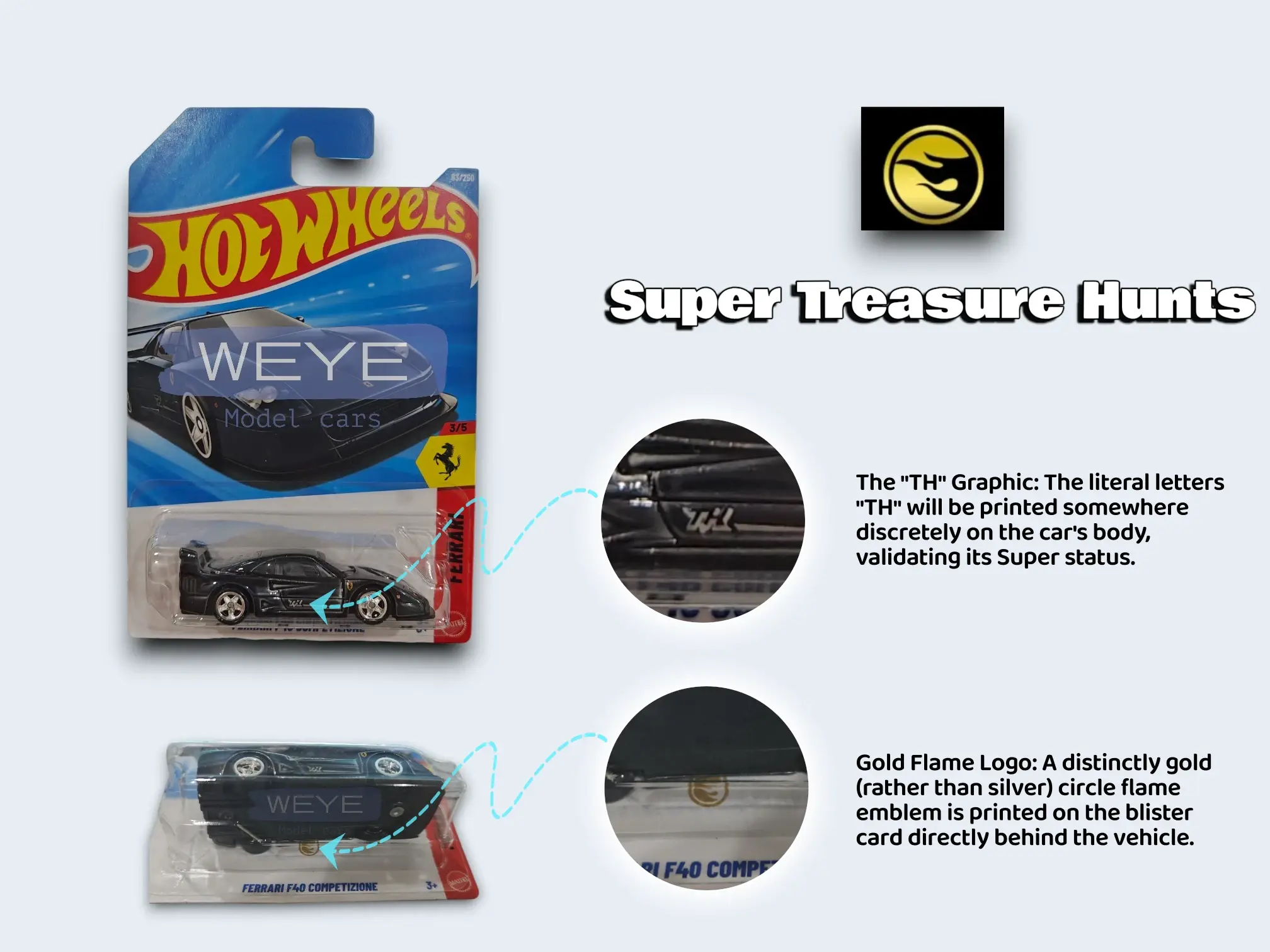
Super Treasure Hunt ($TH) markers: "TH" body graphic & gold flame logo.
Treasure Hunts vs. Super Treasure Hunts
For quick reference when hunting in the aisles, use this comparison breakdown to identify which tier of rarity you hold in your hands:
| Feature | Regular Treasure Hunt (TH) | Super Treasure Hunt ($TH) |
|---|---|---|
| Paint Type | Standard non-metallic enamel | Proprietary glossy Spectraflame metallic |
| Wheels | Standard plastic wheels | Premium Real Riders (Rubber Tires) |
| Marking on Car | Circle Flame Logo | “TH” Letters printed on body |
| Card Marking | Silver Circle Flame behind car | Gold Circle Flame behind car |
The Definitive 2025 Hot Wheels Super Treasure Hunt Tracker
For collectors actively researching how to spot a 2025 Hot Wheels Super Treasure Hunt, knowing exactly which casting to look for is half the battle. Here is a sample of the highly anticipated 2025 $TH lineup:
| Assortment Case | Super Treasure Hunt Model | Series Sub-Theme | Identifying Features |
|---|---|---|---|
| Case A | ’87 AUDI quattro | Factory Fresh | Fading Audi logos, TH logo on doors |
| Case B | HIROHATA MERC | Rod Squad | White flames, TH logo on rear wheel cover |
| Case C | HI-ROLLER II | HW Art Cars | White & black stripes, TH logo on trunk |
| Case D | ’75 DATSUN SUNNY TRUCK (B120) | HW Hot Trucks | Golden stripes, “Super TH” on rear bed |
| Case E | ASTON MARTIN DB4GT HIGH-SPEED | HW Dream Garage | Detailed headlights, specific Castrol livery |
| Case F | ’20 JEEP GLADIATOR | HW Dirt | Orange/white diagonals, TH logo on rear fender |
| Case G | PORSCHE 911 RALLYE | Safari Mode | Distinct rally striping, specialized off-road Real Riders |
| Case H | ’71 MUSTANG FUNNY CAR | Mustang 60th | “Sumthin’ Funny?” graphics, Goodyear tires |
| Case J | ’62 CORVETTE GASSER | HW Reverse Rake | Southwest Gassers logos, TH logo on fenders |
| Case P | BMW M3 WAGON | HW Wagons | Iconic M-Series colors, rubber performance tires |
How to Buy Exclusive Diecast Cars: RLC & Convention Drops
As a beginner collector, one of the most frustrating pain points is scrolling through social media and seeing breathtaking, highly detailed models that you can never seem to find in any store or standard online shop. Why? Because the highest echelon of collection-grade diecast exists entirely outside of traditional retail channels. These are ultra-premium drops designed specifically for dedicated insiders, featuring flawless paint, intricate details, and strictly capped production numbers.
The Red Line Club (RLC) Explained
For Hot Wheels enthusiasts, the Red Line Club (RLC) is the ultimate gateway to premium collecting. It is an exclusive, paid annual membership that grants you access to limited-edition vehicle drops directly on the Mattel Creations website.
Why do collectors willingly endure the stress of “virtual waiting rooms” and site crashes just to buy a 1:64 scale car? Because RLC vehicles are fundamentally different from retail toys. They feature hand-polished Spectraflame paint, articulated parts (like opening hoods and gullwing doors), complex multi-piece engines, and individually numbered chassis. A standard $25 RLC drop routinely sells out in under three minutes and can instantly command $100 or more on the secondary market.
What is a Diecast Convention Exclusive?
One of the biggest hurdles for new collectors is discovering an incredible model, only to realize it is a “Convention Exclusive.” So, what exactly does this mean in the diecast world?
A diecast convention exclusive is a highly limited model car produced specifically to be sold at a physical event, such as the Hot Wheels Collectors Convention, the Shizuoka Hobby Show in Japan, or major international toy expos. To acquire one at the original retail price, a collector must physically buy an event ticket, travel to the location, and often stand in line for hours before the stock runs out.
This massive geographic and physical barrier creates instant scarcity. While Hot Wheels dominates the American convention scene, premium collection-grade brands highly favored by serious enthusiasts—such as Motorhelix, MINI GT, and Pop Race—also utilize this strategy. These brands frequently release event-specific models featuring special chameleon liveries, unique carbon-fiber detailing, or exclusive display cases strictly limited to a few hundred pieces worldwide for attendees.
Convention Exclusives with Astronomical Secondary Market Values
To understand the sheer investment weight of these event drops, you only need to look at the secondary market. Once the convention doors close, the prices for these exclusives skyrocket. Here are a few notable examples of event drops that have reached astronomical valuations:
| Model & Brand | Event Context | Estimated Secondary Value |
|---|---|---|
| Hot Wheels RLC “Pink Party” Nissan Skyline GT-R (R34) | Sold exclusively at the Friday night party during the Annual Collectors Convention. | $1,000 – $2,500+ |
| Motorhelix 1:18 Nissan Skyline GT-R (R34) Special Event Editions | Ultra-limited drops (often under 50 units) featuring specific chameleon paints or Z-Tune carbon hoods at major Asian Hobby Shows. | $500 – $1,000+ |
| MINI GT / Tarmac Works Liberty Walk Exclusives | Regional expos like the Tokyo Auto Salon, featuring exclusive packaging and unreleased liveries. | 3x to 5x Initial Retail Price instantly |
High-Fashion Brand Collaborations
Beyond conventions, diecast manufacturers have astutely tapped into the luxury fashion market. The absolute pinnacle of this trend was the staggering collaboration between Mattel Creations and Italian luxury house Gucci. To celebrate Gucci’s 100th anniversary, the brand released a meticulously detailed 1:64 Cadillac “Seville by Gucci,” strictly capped at 5,000 units. It instantly became a museum-grade collectible. Similar extreme hype surrounded a collaboration with Swiss watchmaker IWC Schaffhausen, yielding a Mercedes-Benz 300 SL packaged with a luxury timepiece, limited to merely 50 units worldwide.
Diecast Factory Errors: The Value of Error Model Cars vs. Variations
In the highly nuanced diecast community, a manufacturing error can be incredibly highly desired. Because millions of Hot Wheels are produced daily, mistakes that slip past quality control are statistically rare.
It is crucial to distinguish a genuine Error from a Variation. A variation is a deliberate running change made by factory management (e.g., changing a wheel style due to part shortages). An error is an accidental, chaotic mistake. A unique error on an immensely popular casting (like a Nissan Skyline GT-R) can carry substantial financial weight.
Valuing an error is highly speculative and subjective; it depends entirely on what a niche buyer is willing to pay at auction. However, the community generally categorizes errors by visual severity and rarity.
| Error Type | Technical Description | Rarity Level | Estimated Premium* |
|---|---|---|---|
| Incorrect / Switched Wheels | Non-matching wheels, missing chrome foil, or the wrong wheel type entirely. | Uncommon | $10 – $15 |
| Upside Down / Orientation | The car is packaged facing the exact wrong direction or completely upside down within the blister. | Uncommon | $12 – $15 |
| Missing Parts | Crucial components omitted during assembly, such as missing interiors, seats, or roofs. | Rare | $15 – $20 |
| Tampo Errors | Graphics or sponsor logos applied incorrectly, severely smudged, or completely missing. | Rare | $20 – $35 |
| Unspun | The vehicle was never riveted; the base, body, interior, and wheels remain loose. | Very Rare | $45 – $60+ |
| Wrong Card / Miscard | A vehicle is glued to a blister card intended for a completely different model. | Legendary | $60 – $75+ |
| Super Treasure Hunt Error | An error manifesting on an already ultra-rare $TH model. | Unheard Of | Speculative ($100 – $500+) |
*Note: Base casting popularity acts as a multiplier. An error on an iconic JDM legend holds exponentially high value.
Warning: Errors can be easily faked. Unscrupulous individuals use acetone to dissolve blister glue, swap cars, and reseal the package. Authentication is paramount when purchasing error cars online.
Are Limited Editions Model Cars a Good Investment?
While the primary motivation should always be personal passion, the financial appreciation of rare diecast cars cannot be ignored. The secondary market operates cyclically. Currently, models from the 1980s, 90s, and early 2000s—particularly iconic JDM legends like the Toyota Supra and Mazda RX-7—are experiencing massive spikes in value as younger generations reclaim their childhood nostalgia.
Not every 1:64 scale model will fund your retirement. Models that appreciate aggressively meet unforgiving criteria: severely limited production runs, premium tier releases (like raw Chase cars), and highly sought-after brand collaborations. The absolute holy grail of diecast investment remains authenticated vintage prototypes, such as the 1969 Pink Rear-Loading Volkswagen Beach Bomb, currently valued at an astronomical $175,000.
Transitioning into advanced collecting means recognizing these patterns. Welcome to the exclusive inner circle of diecast collecting. Equip your knowledge, verify your acquisitions, and above all else—enjoy the thrill of the hunt.